
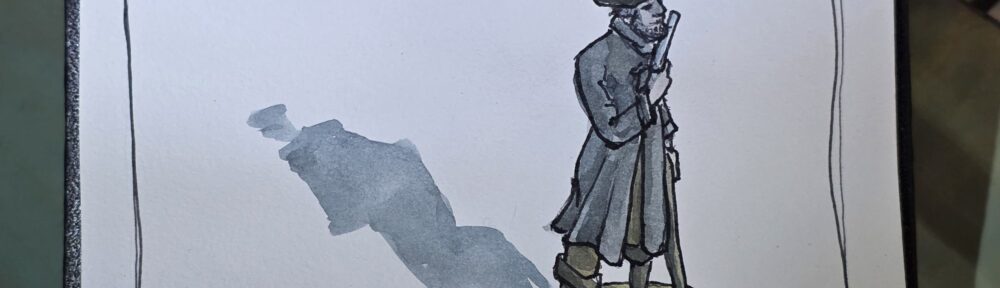
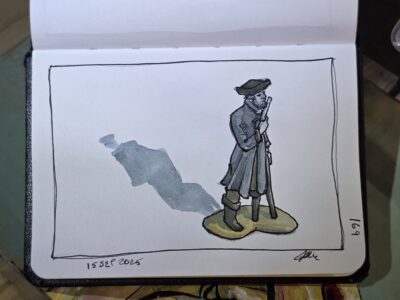
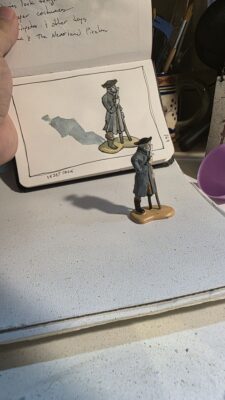
This morning’s random object was a pirate with a peg leg. We’ve done pirates before, but today I steered into costumes, myths, and the way popular culture shaped what we think a pirate looks like.
In real life, pirates weren’t stomping around on wooden legs. A leg injury at sea was more likely to kill than to heal, since pirate ships had carpenters with saws, not surgeons with medicine. Still, stories, paintings, and eventually movies gave us the peg-legged pirate, hook hand, and eyepatch, building an image that looked scary and tough even if it wasn’t accurate.
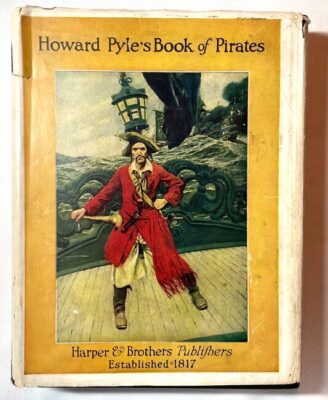
Howard Pyle’s 1800s illustrations stitched together Spanish and Romani styles, piling on scarves and sashes that no sailor would actually wear while climbing rigging in tropical heat. His work shaped Treasure Island and, by extension, the entire pirate genre. Later, boxed Halloween costumes by Ben Cooper and toy lines like LEGO Pirates nailed down the look for kids everywhere.
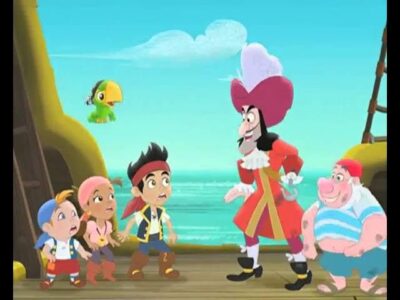
That’s how we got from amputations on wooden decks to Disney cartoons teaching that “a good pirate always shares.” It’s not history, but it is culture, and it shows how illustration, costume, and play turn myth into something more real than fact.
Click here to watch this episode of Sketch & Coffee!
Also, if you, or a teacher friend, would like a 20-30 minute lesson plan about pirate costume tropes, feel free to download and share this one:
Leave a Reply