

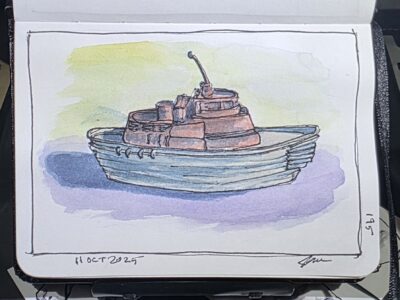
From muscle and tides to diesel beasts, this morning’s sketch dives into the world of tugboats and their hidden strength. Discover how much power it takes to move a ship, and what a “bollard pull” really means.
Sketch & Coffee, Live! is streamed daily at 5:30am, Texas Time, at the YouTubes

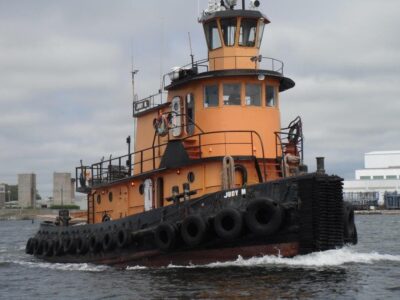
Tugboats move the giants. They pull ships into port, tow them upriver, break ice, and even help put out fires at sea. They feel like a newer part of maritime history because diesel power is a modern invention compared to sails and tides, but the work has always been the same. Move what is too big to move on its own. Get it done no matter the weather.
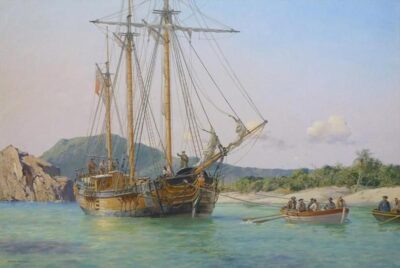
Before engines, every bit of that movement came from muscle, rope, and tide. Crews rowed a line out to shore or dropped a small anchor ahead, then cranked the capstan to haul the ship forward, inch by inch. The process was called warping or kedging, depending on how you used the anchor. It was slow, gritty, and required a steady rhythm, sometimes a song to keep the work timed right. Captains also used the tides to help, but a bad guess could mean running aground and waiting half a day for water to lift the ship free again.
Steam towboats came first, then diesel tugs took over. Diesel brought torque, reliability, and strength that could be measured. Tug performance today is measured in bollard pull, the amount of static force the tug can exert when tied to a fixed point and pulling with everything it has. A working harbor tug might pull 30 to 80 tons, and ocean-going monsters can exceed 200 tons. It takes that kind of power to nudge tankers and cargo ships through tight channels without wrecking anything in the process.
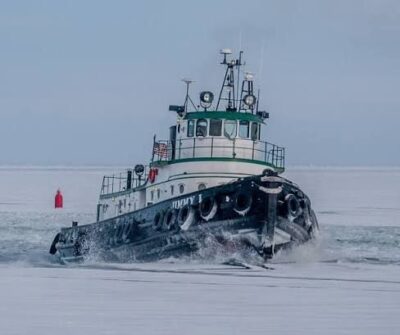
There isn’t just one kind of tug. Some push from behind, some pull from the side, and some can spin a full circle using azimuth thrusters. Others are built for specific jobs, icebreakers in the north, rescue tugs for emergencies, and fireboats with giant water cannons that can drench a ship from fifty yards away. The first fully electric tug, Sparky, launched in New Zealand in 2022, proving even old-school muscle can go green.
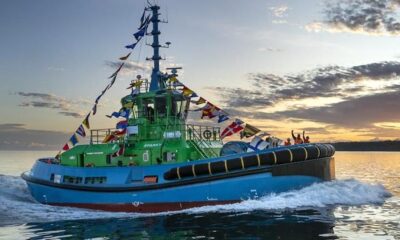
For all the technology, it still takes people to run them. The tug and towboat industry employs tens of thousands around the world, roughly 35,000 in the United States alone. Skilled operators are in demand, because precision handling of heavy ships in tight spaces leaves no room for error. The job may look small next to the giants they move, but tugboats prove that the smallest vessel can carry the biggest responsibility.
Click here to watch this episode of Sketch & Coffee
Also, if you, or a teacher friend, would like a 20-30 minute lesson plan about tugboats, feel free to download and share this one:
Leave a Reply