

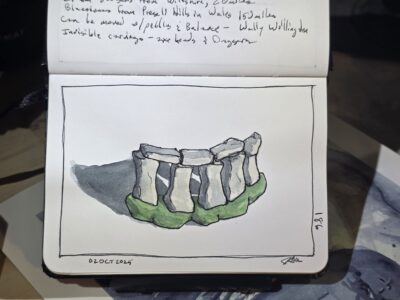
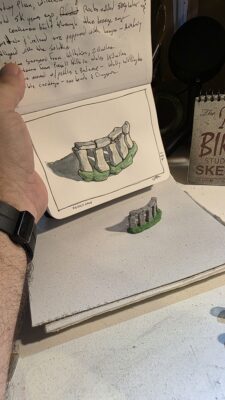
Stonehenge came out of the Random Object Randomogrifier today, so at 5:30 in the morning I put pencil to paper and blocked in that familiar shape.
Sketch & Coffee, Live! is streamed daily at 5:30am, Texas Time, at the YouTubes
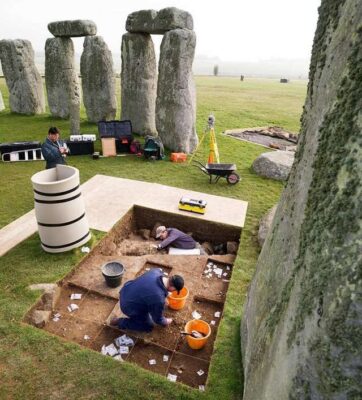
The question always comes up, how do we know it is 5,000 years old? It comes from the dirt layers and the tools found nearby. Antler handled axes, Neolithic and Bronze Age tools, and radiocarbon dating that clusters in the same range. It is a rough estimate, but a good one, and it lines up with finds in other places.
The word “henge” brings its own confusion. Archaeologists define a henge as a circular earthwork with a berm and an inside ditch used for ceremony, not defense.

Stonehenge itself does not meet that definition, since its ditch is outside, but the name stuck anyway. Some even suggest “henge” may have come from “hanging stone,” which makes more sense when you see the lintels across the uprights.

Moving the stones always raises eyebrows. Some were from 20 miles away, others from 150 miles away. While aliens make for a fun story, a retired construction worker named Wally Willington showed you can walk a massive stone with pebbles and leverage, just like rolling construction barrels. The stones align with the solstices, not the stars, and that is mystery enough.
Click here to watch this episode of Sketch & Coffee!
Also, if you, or a teacher friend, would like a 20-30 minutes lesson plan on Stonehenge, feel free to download and share this one:
Leave a Reply