
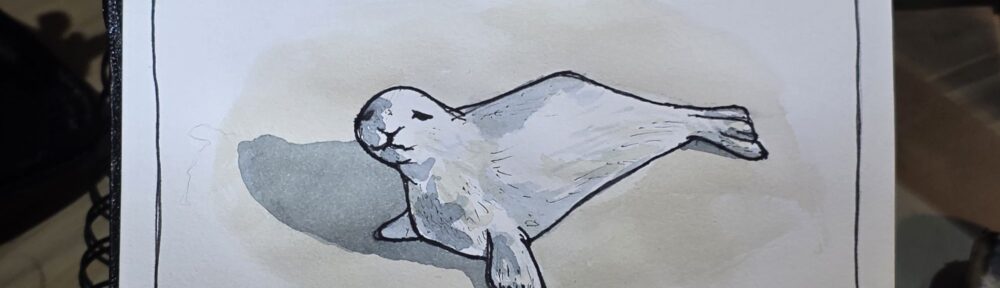
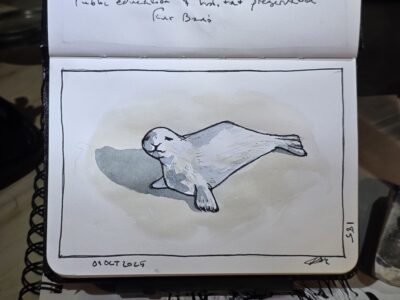
Today’s random object turned out to be a harp seal, and at first glance, it was just a little white blob on the page.
Sketch & Coffee, Live! is streamed daily at 5:30am, Texas Time, at the YouTubes
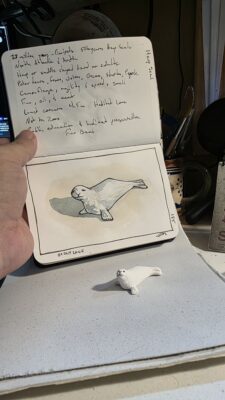
Joe in chat had asked yesterday why they were called harp seals, and I didn’t know then. Today I do, and it’s because of the dark harp or saddle shape that shows up on their backs when they grow out of the whitecoat stage.

That white fur is what nearly did them in back in the 1800s and 1900s. They were prized for their soft pelts, their blubber for oil, and their meat. Hunters used to just walk up and club them because on land they are slow and clumsy. Harp seals are true seals, which means they move with flippers and bellies, not the most agile creatures once out of the water.

In the water it’s another story. They are fast, powerful, and top-level predators that can outswim almost anything except orcas and sharks. On land, they do tricks like lying with tails downwind and eyes upwind to spot polar bears sneaking up. Pups are most vulnerable to foxes and wolves, while adults are more often hunted by bears and people.

They’re not endangered now. Depending on who you ask, there are four to seven million harp seals alive today, a rebound from heavy hunting. Zoos can’t keep them because of their need for cold ice and wide water, though injured ones sometimes get rehabilitated and returned. Their biggest threat today is climate change pushing the ice north into polar bear territory.
Click here to watch this episode of Sketch & Coffee!
Also, if you, or a teacher friend, would like a 20-30 minute lesson plan about harp seals, feel free to download and share this one:
Leave a Reply