
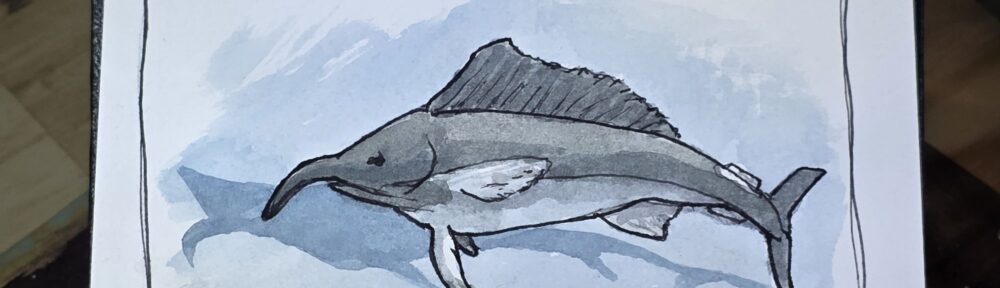
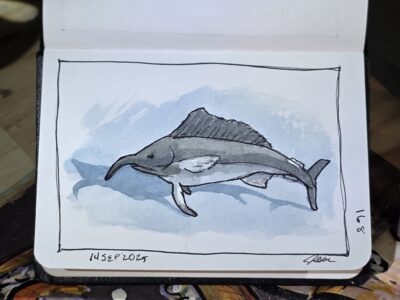
This morning’s Random Object was a bent-nosed sailfish, not a swordfish like I thought at first glance.
Sketch & Coffee, Live! is streamed daily at 5:30am, Texas Time, at the YouTubes
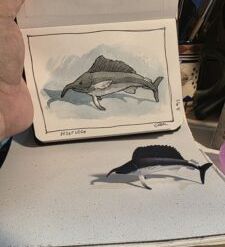
My kids called me out right away, rattling off facts about how a swordfish doesn’t have the big dorsal fin. That fin, the sail, is what makes this fish stand out. Even though the toy had storage damage, the sail was unmistakable.
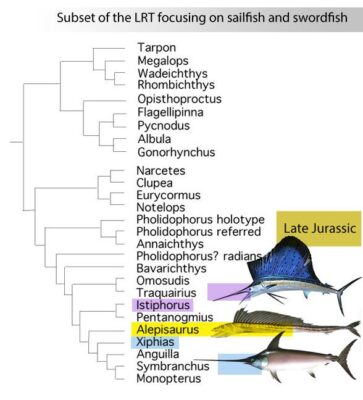
Sailfish split off from tuna and mackerel about 50 million years ago. Later, marlins separated around 40 million years ago, and sailfish branched from marlins 25 million years ago, developing their unique sail. They are among the fastest ocean swimmers, slashing with their softer bills instead of stabbing like swordfish. They use the sail to herd sardines into baitballs and even to signal to other sailfish, working together to make hunting easier before splitting off again to go their own way.
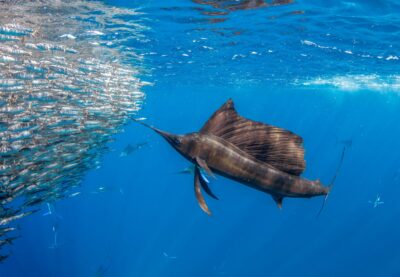
They also have specialized heater organs behind their eyes. These keep their brain and vision centers warm so they can process information at lightning speed while chasing prey, even in colder water layers. Unlike tuna, which heat their whole bodies to move into cold seas, sailfish are tropical and subtropical hunters tied to warm waters.
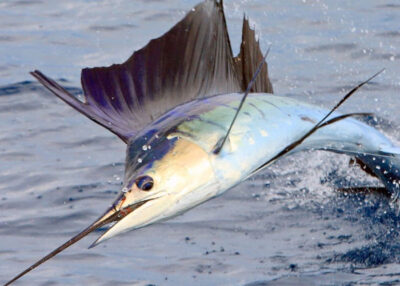
Today, they are not endangered, partly because they breed fast and grow quickly. Many countries and tournaments have enacted catch and release programs that use non-barbed hooks and replica trophies instead of mounted bodies. That way, these incredible fish remain in the ocean, still flashing their sails.
Click here if you would like to watch this episode of Sketch & Coffee!
Also, if you, or a teacher friend, would like a 20-30 minute lesson plan about sailfish, feel free to download and share this one:
Leave a Reply