
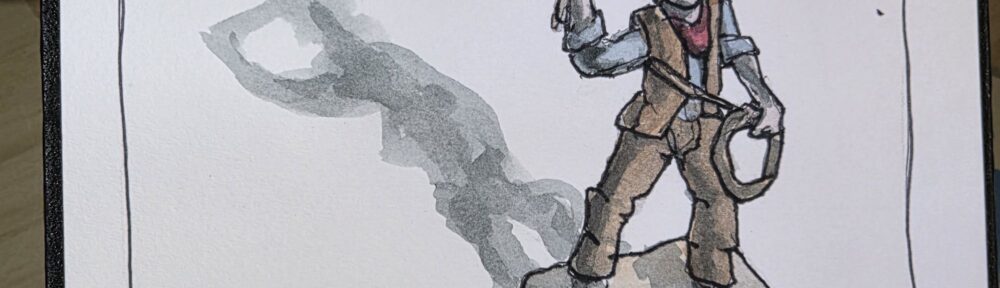
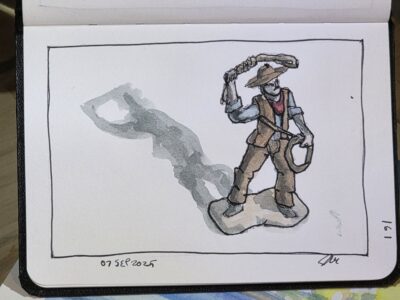
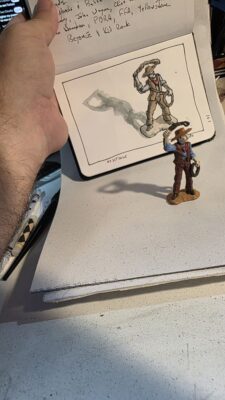
This morning’s Random Object from the Randomogrifier was a cowboy with a lasso, one of those Safari Ltd figures with sharp detail.
Sketch & Coffee, Live! is streamed daily at 5:30am, Texas Time, at the YouTubes
The cowboy era itself didn’t stretch nearly as far as the movies make it seem. Historians mark it from about 1865 to 1895, just thirty years of wide open drives across the plains.
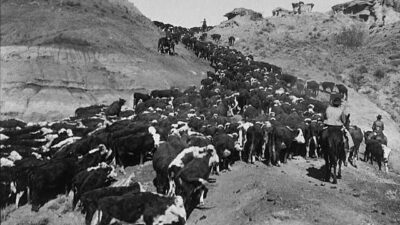
The job was moving cattle. Crews would push thousands of animals north out of Texas and sometimes all the way to Chicago, aiming for about fourteen miles a day. Push too fast and the herd lost weight or died, too slow and you lost money. At night, the herds roamed on tens of thousands of acres, and it was the cowboy’s job to keep them from wandering or being stolen.
That lifestyle broke down by the 1870s and 1880s. Barbed wire made open trails harder to cross, railroads cut the need for long drives, and brutal winters like the blizzards of 1886–87 wiped out whole herds. Ranchers brought cattle closer to home and the cowboy as a profession dwindled.
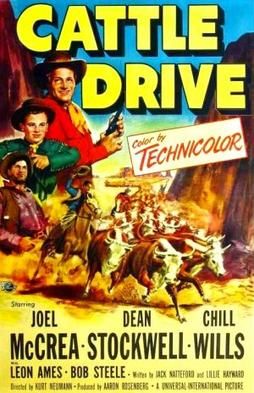
What lived on was the legend. Dime novels, Wild West shows, and later movies blurred the line between cowboys and gunslingers. Real cowhands often were not even allowed to carry pistols, but pulp stories and traveling shows made shootists and cowboys one and the same. Hollywood added Gene Autry, John Wayne, Clint Eastwood, and even spoofs like City Slickers. Today, rodeos and shows like Yellowstone keep the cowboy alive as an American icon even though the job itself was short lived.
Click here to watch this episode of Sketch & Coffee
Also, if you or a teacher friend are in need of a 20-30 minute lesson plan about cowboys, feel free to download and share this one:
Leave a Reply