
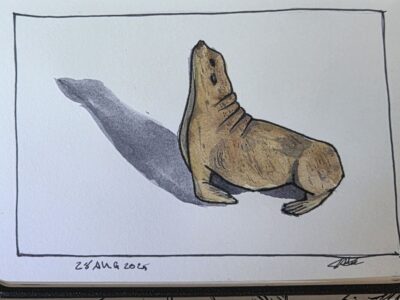
Sea lions are a special branch of the pinniped family, and today’s random object gave me a chance to talk through their place in the animal world.
Sketch & Coffee, Live! is streamed daily at 5:30am, Texas Time, at the YouTubes
You can tell a sea lion from a seal or a walrus by a few clear marks. Sea lions can push up on their foreflippers and “walk” on land, something true seals cannot do. Walruses would show off their tusks, and seals don’t have the little ear flaps you can spot if you look closely at a sea lion’s head.
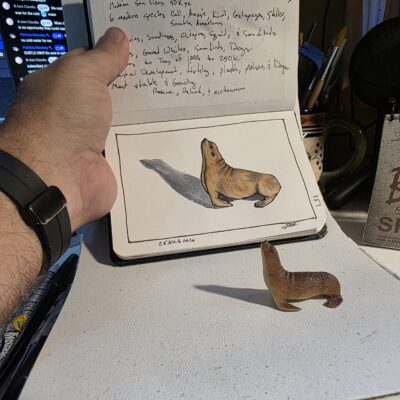
The name pinniped means “flipper-footed,” and it ties together seals, sea lions, and walruses. They branched off from bear-like carnivores about 50 million years ago. The group split again around 20 to 25 million years ago, forming the three main families we know today. Modern sea lions took shape much later, between 20,000 and 70,000 years ago, their form locking in during the ice ages. That same ice age allowed them to island hop to Australia and New Zealand, but once the glaciers melted and seas rose, they were trapped there. The cold Antarctic current blocked them from pushing farther south, which is why sea lions never made it to Antarctica, even though other pinnipeds did.
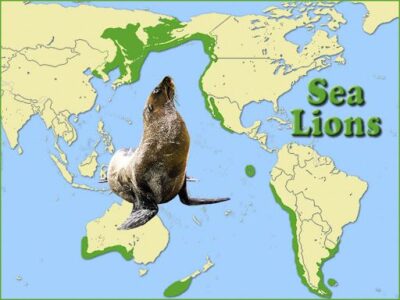
There are six living species of sea lions today: California, Steller, South American, Australian, New Zealand, and Galápagos. California sea lions once dropped as low as 9,000 animals, but with the 1972 Marine Mammal Protection Act they’ve rebounded to over 250,000. Steller sea lions fell from about 300,000 in the 1970s to around 100,000 by the 1990s. Eastern populations have stabilized, while western populations still hover around 40,000 to 50,000. South American sea lions are fairly numerous, but the Australian, New Zealand, and Galápagos species remain small and vulnerable.
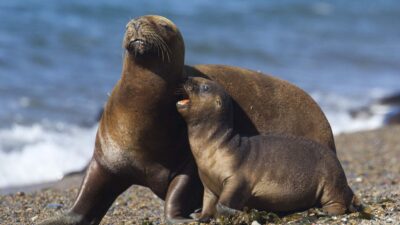
Sea lions are opportunistic carnivores, taking anchovies, sardines, squid, octopus, and even the occasional seabird. Pups face about a 40 percent mortality rate in the first year. Orcas and great white sharks are their top predators, but gulls, stray dogs, and even large male sea lions can kill the young. Human threats include fishing nets, plastics, pollution, and shrinking haul-out spaces from coastal development. Ecotourism has helped shift the balance by giving local economies a reason to protect sea lions, making sure they’ll still be there for the next generation to see.
Click here to watch this episode of Sketch & Coffee, Live!
Also, if you or a teacher friend are in need of a 20-30 minute lesson about sea lions, feel free to download and share this lesson plan:
Leave a Reply