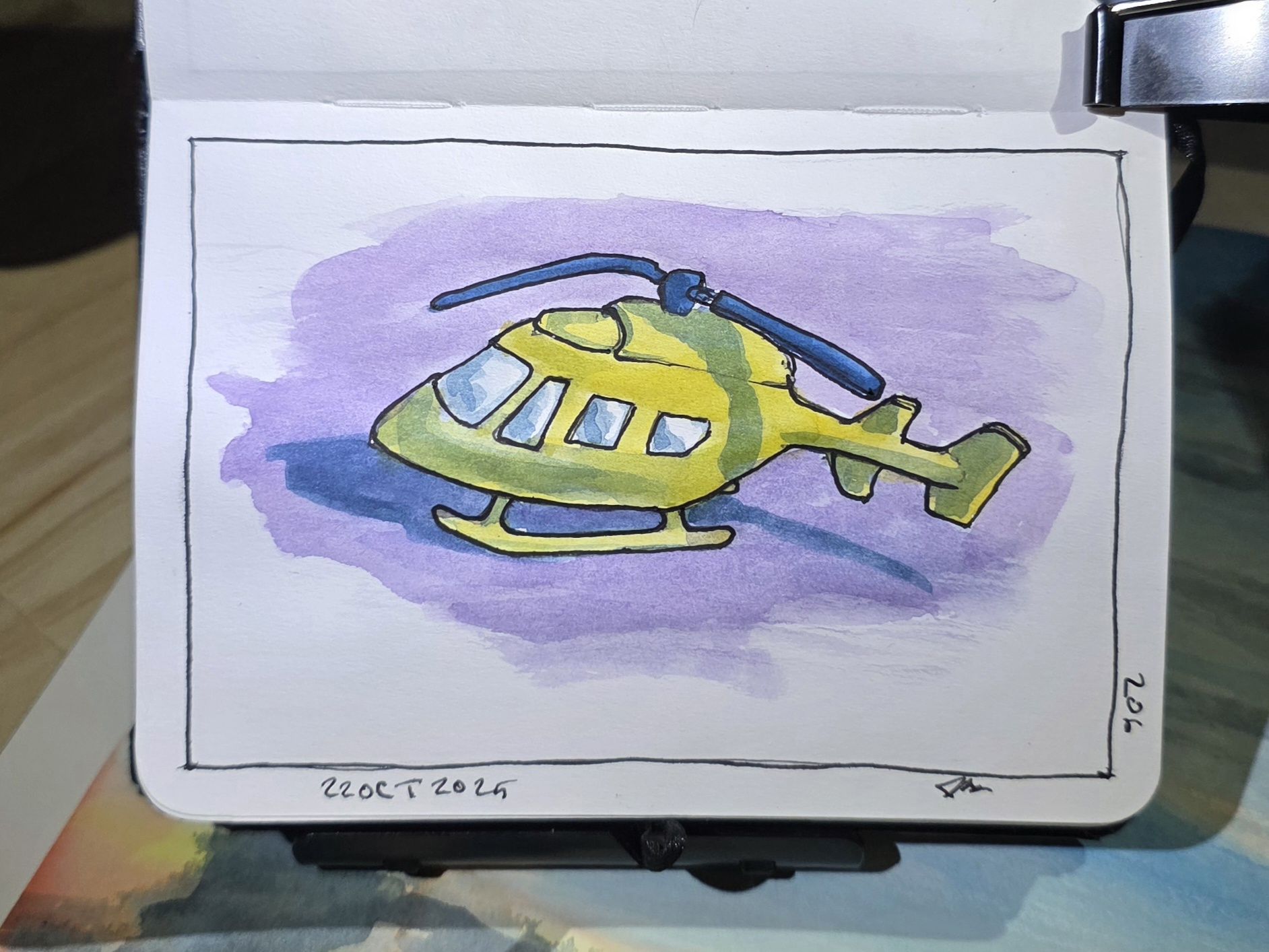
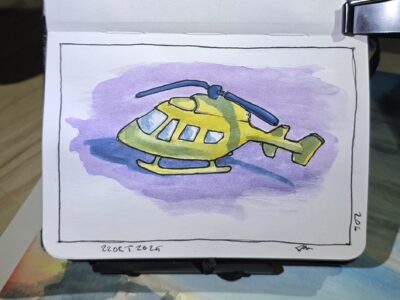
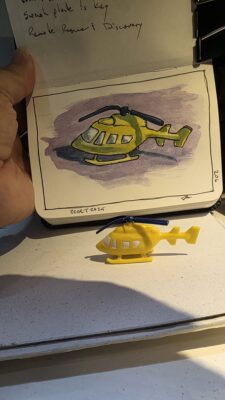
I pulled a helicopter from the Random Object Randomogrifier and laughed at the bent blades. The toy is beat up from living in the canisters, which makes it perfect. The whole point here is to draw what I see, not what I expect to see. When I fight that impulse, the drawing looks more like the real thing and less like a guess.
Sketch & Coffee, Live! is streamed daily at 5:30am, Texas Time, at the YouTubes
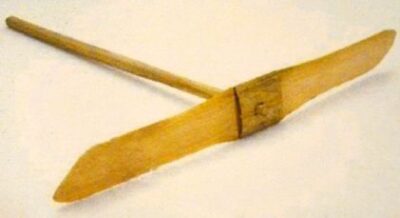
We dug into the word itself. Helicopter is helic-o-pter. Helico means spiral shaped, and pter points to wing or flight. That same pter shows up in pterodactyl, which is a winged finger. Long before engines, a little bamboo toy spun up from the hands and showed how twisted blades could lift. That simple top set imaginations on fire.
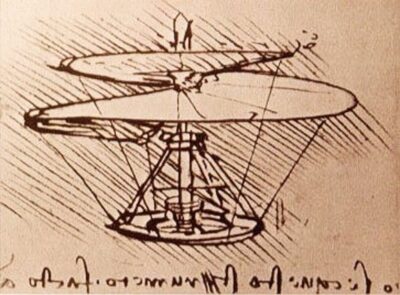
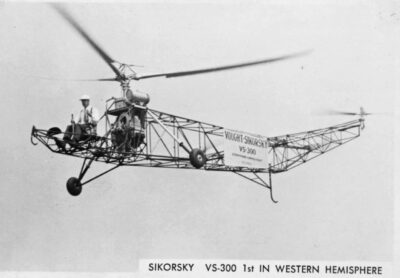
Leonardo da Vinci sketched a flying screw that could compress the air and lift. He did not build it, but people later made models that fly. The idea kept passing forward until Igor Sikorsky solved the big problem in 1939. Everyone could make lift, but nobody could stop the body from spinning, so Sikorsky added a rotor on the tail.
That tail rotor is the key many toys forget. Without it the cabin would spin under the blades once it left the ground. Helicopter blades are long, thin wings that move the air themselves. A swashplate twists the blade pitch as they spin, so a pilot can hover, slide, or hold steady on a cliff face. That is how these machines get into remote places and bring people back.
I love this ritual. It keeps me honest, it makes me notice what is really in front of me, and it keeps me accountable to practice. The yellow popped today, and I kept the wonky rotor without “fixing” it. That is a win. Share your sketch from the community page or email it to me so I can see what you built from the same little toy.
Click here to watch this episode of Sketch & Coffee
Also, if you, or a teacher friend, would like a 20-30 minute lesson plan about helicopters, feel free to download and share this one:
Leave a Reply