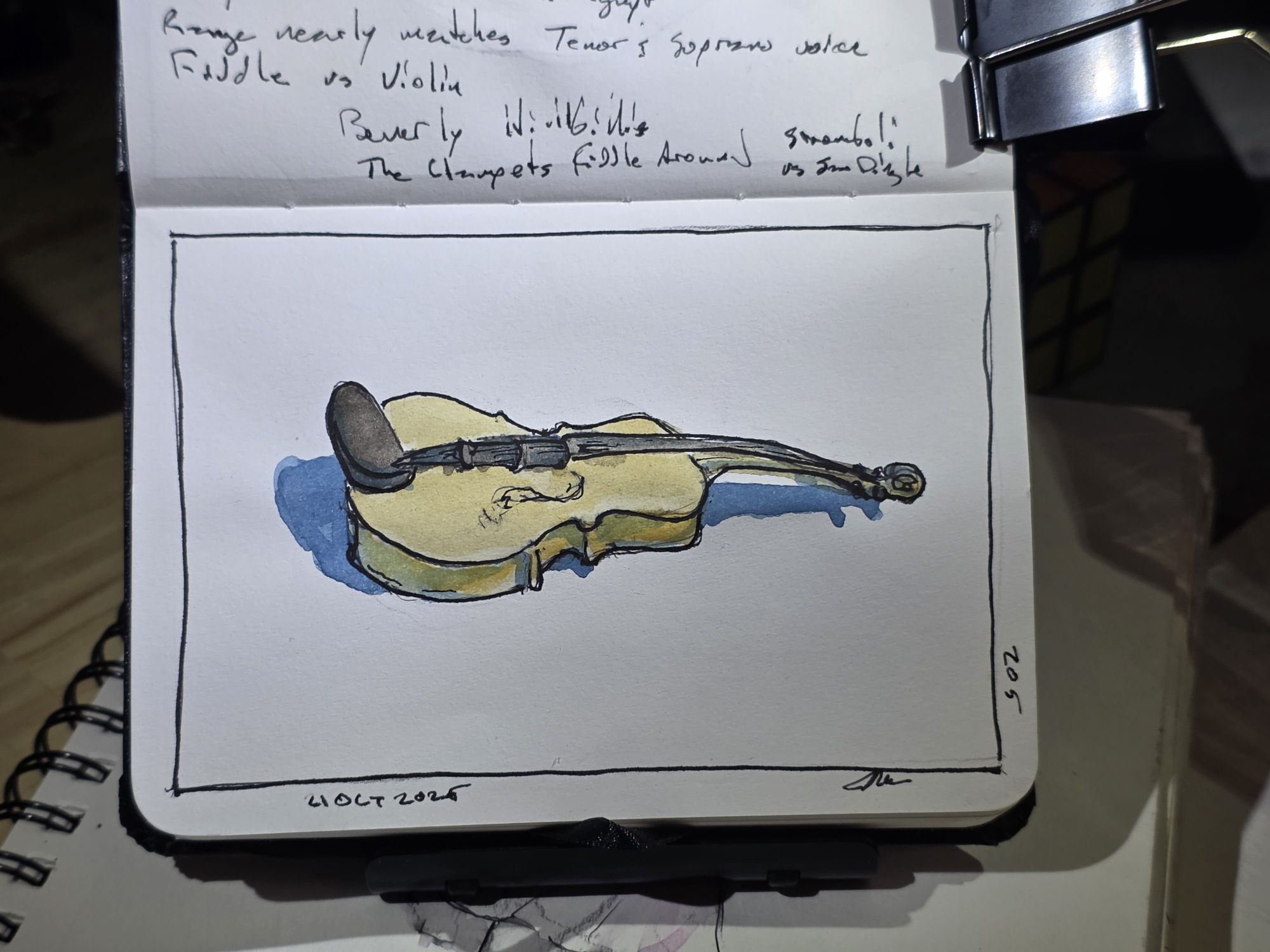
Good morning, good morning, good morning. At 5:30 in the morning I pulled a tiny violin from the Random Object Randomogrifier and set it down for a quick study.
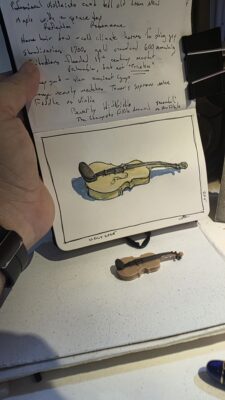
The little Safari toy is surprisingly detailed, with string grooves and tricky curves that push my line control. I blocked in ovals and a neck, checked the fit, then restarted larger so the composition could breathe. The exercise is to draw what I see, not what I expect to see, and that is always harder than it sounds.
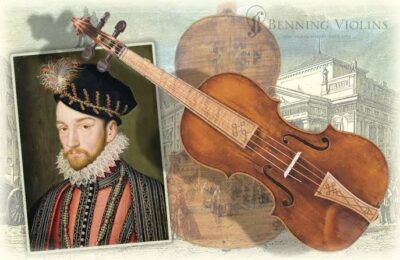
While the ink dried, I talked history. The modern violin settled into its form about 600 years ago. Andrea Amati was working mid 1500s in Cremona, and the outline we recognize has stayed basically the same ever since. Maple for the back and sides to reflect, spruce for the top to resonate, and a little pine soundpost under the bridge to move the vibration around the body. It is a dense body with a resonating face, simple and brilliant.
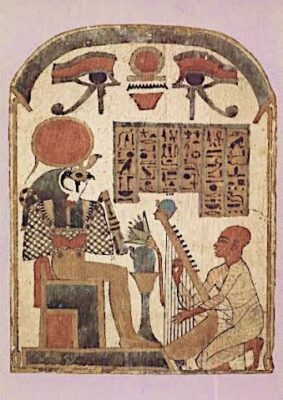
We wandered into strings and bows. Early makers used sheepgut for strings, sometimes called catgut, and the idea goes way back, with ancient Egypt showing gut strings in old carvings. Today there are synthetic and steel options, but players still argue about tone and feel. Bows are strung with horsehair, usually from cold climate horses because the hair has more texture and grip. You can use synthetic hair, but the natural stuff tends to grab the string better.
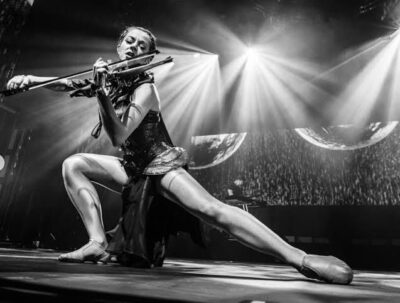
Sound is where the violin shows off. Many players swear old instruments are superior, yet blind tests say even pros cannot reliably tell great modern violins from revered antiques. The violin’s range mirrors soprano or tenor, so composers often write as if it is a human voice. That is why it gets so many hero lines, it can sing. And for the record, a fiddle is a violin with setup changes, like a flatter bridge that lets you ring multiple strings.
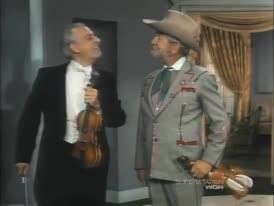
For a closing laugh, I tipped my hat to the Beverly Hillbillies bit where a fiddle player claims he earns more than the fancy maestro. Classy or country, I just like the sound. I finished the sketch, took a quick photo, and teased tomorrow’s pull. Helicopter noises incoming. Same ArtisticBiker time, same ArtisticBiker channel.
Click here to watch this episode of the Sketch & Coffee Live
Also, if you, or a teacher friend, would like a 20-30 minute lesson plan about violins, feel free to download and share this one:
Leave a Reply