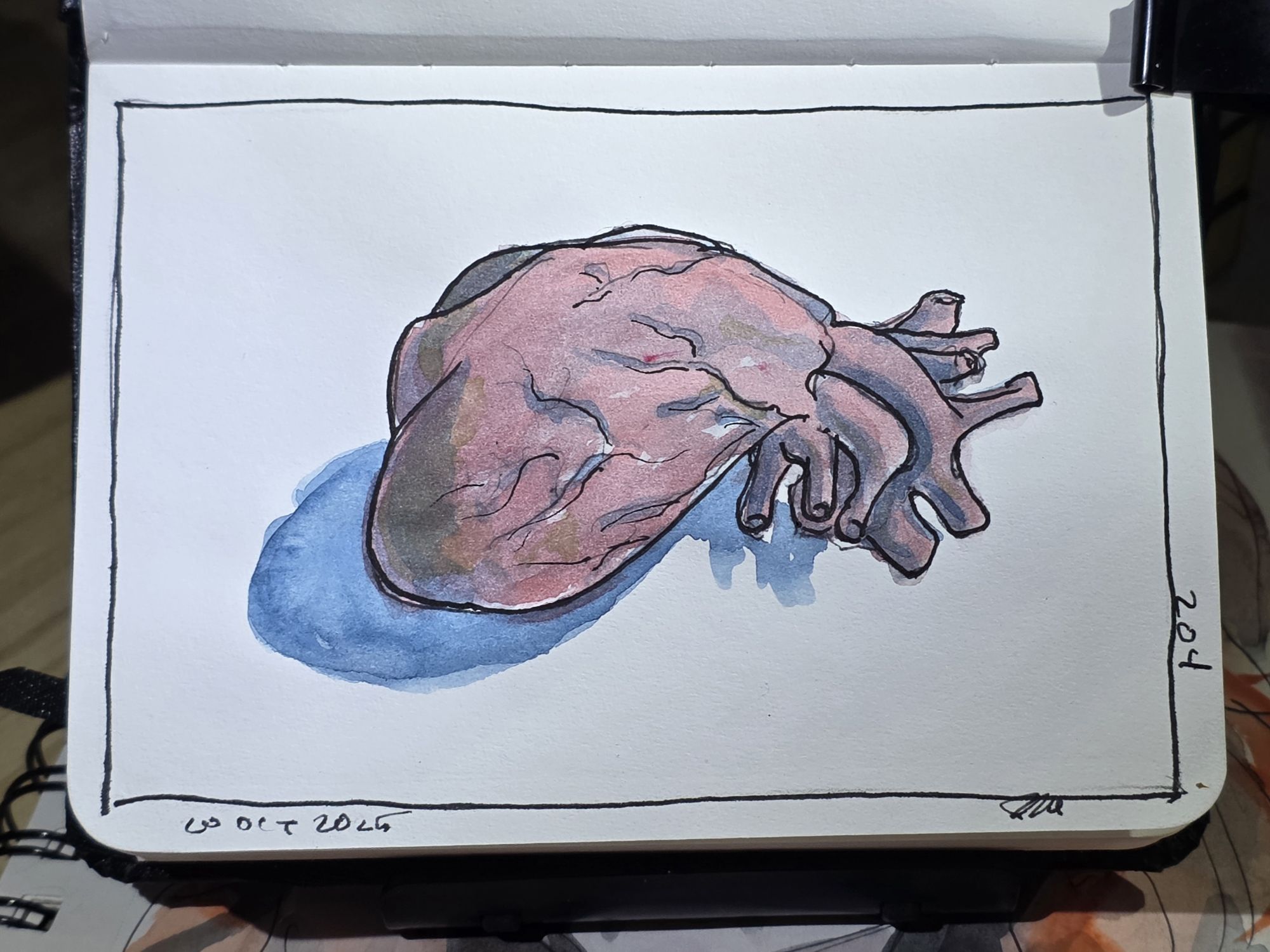
Today’s random object is a human heart from the Safari organ collection.It’s full of visible veins and ridges and ready for close study at 5:30 in the morning.
Sketch & Coffee, Live! is streamed daily at 5:30am, Texas Time, at the YouTubes
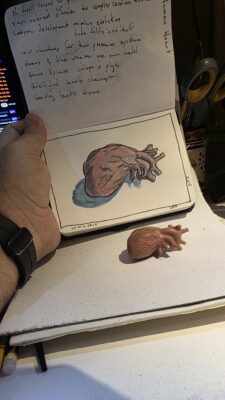
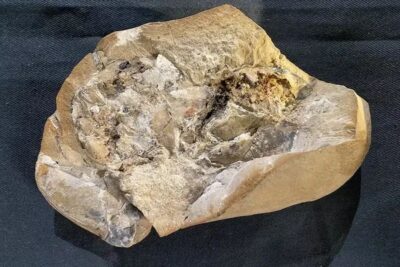
Soft tissue rarely fossilizes, so the deep history of hearts is mostly hidden. Still, the idea of a circulatory pump shows up at least 500 million years ago, and that is enough to spark some wonder while the coffee kicks in.
Across the animal kingdom there are many heart designs. Some creatures use long stick shaped hearts or simple tubes. Others use multi chambered setups that move pressurized nutrients from one chamber to another. The human version uses four chambers, and during embryonic development you can watch two tubes slide together, merge into one, then twist and fold into four with working valves.
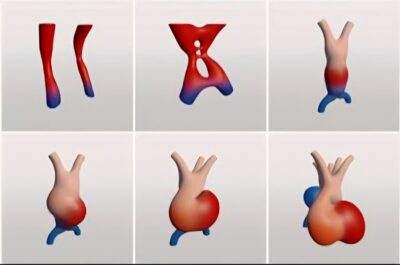
That folding ties to a bigger idea. Embryonic development seems to echo the evolutionary path. You see a simple tube, then lobes, then three chambers, then four. It is like a quick replay of ancestral steps as tissues differentiate and settle into their jobs.
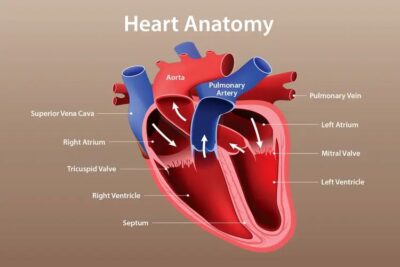
Functionally, two pressure systems inside one organ make the whole plan work. One side pumps at lung friendly pressure for gas exchange. The other side pumps at a higher pressure for delivery and waste management out in the tissues. If the lung circuit had the higher pressure, gas exchange would fail. If the body circuit had the lower pressure, metabolism would starve. Whether you are a shrew with a tiny heart beating near a thousand per minute or a blue whale with a heart so big someone joked you could ride a bicycle into it, the model is the same.
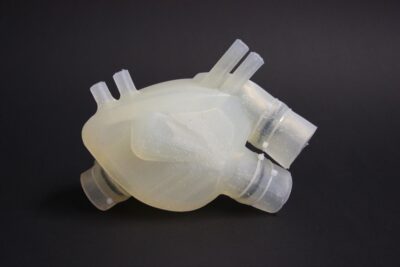
When a heart fails, there’s a race to replace it with a lifesaving alternative. Modern medicine rides alongside all of this. Human donor hearts are scarce, so teams test animal hearts and lab grown tissue to buy time and restore rhythm. An artificial heart can push blood, but it struggles to read the body’s scattered sensors that tell it when to speed up, slow down, or redirect flow. Until a microprocessor and smart control can listen to those signals like a native heart, a full replacement stays a bridge, not a destination.
Click here to watch this episode of Sketch and Coffee
Also, if you, or a teacher friend, would like a 20-30 minute lesson plan about hearts, feel free to download and share this one:
Leave a Reply