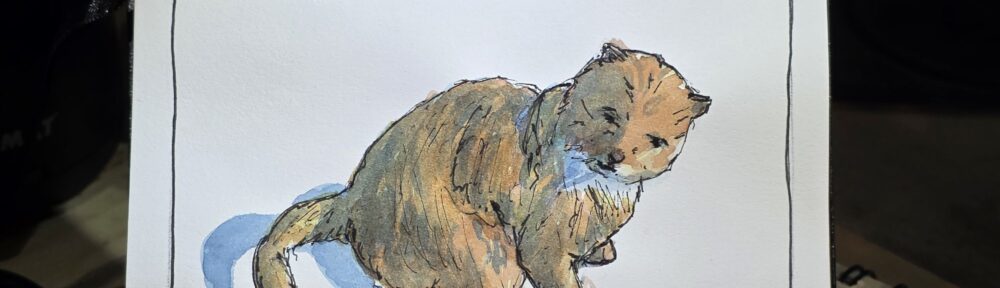
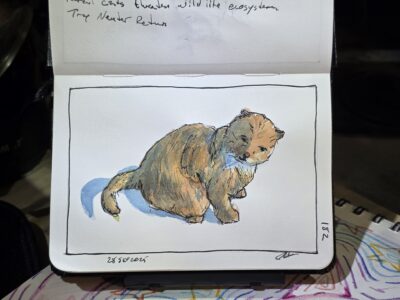
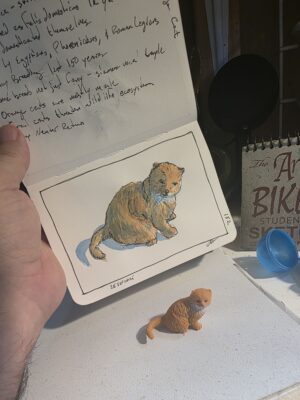
Today’s random object was an orange kitten. Cats have always had a knack for showing up in our lives, whether in paintings, history, or curled up in our laps, and this little model was no exception.
Sketch & Coffee, Live! is streamed daily at 5:30am, Texas Time, at the YouTubes
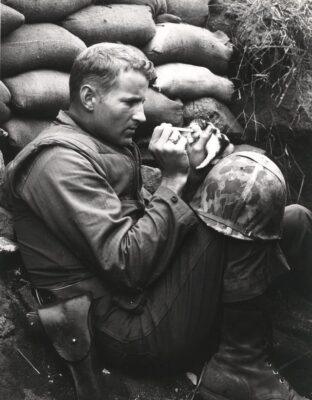
Felis lybica, the African wildcat, still roams the Middle East and Africa today and stands as the ancestor of our household companions. About 9,000 years ago cats began trailing humans, drawn to the mice feeding on our grain stores. They weren’t dragged into homes, they walked in on their own terms. Egyptians worshipped them, Phoenicians and Roman soldiers carried them across the known world, and the partnership was sealed. Even the toughest soldiers had kittens stashed in their packs.
Drawing a kitten is a challenge. Orange cats tend to look grumpy, their faces harder to soften. Brush strokes need to follow the fur, not fight against it, to give shape and texture. Renaissance painters sometimes made cats look like little people, and I found myself struggling not to do the same. Kittens wobble, run sideways, and fall over. That joy of awkward youth is hard to capture, but it makes them irresistible.
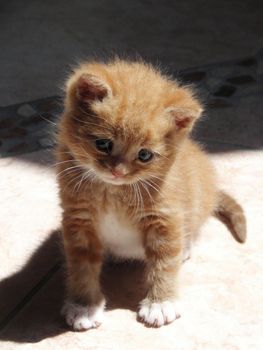
Orange cats bring their own quirks. Most are male because of genetics, just as calicos are almost all female. People often think orange cats are goofy or mean, but that may be because they’re mostly boys, and boys behave differently. Feral kittens are another story, fragile and often abandoned, and that led to the reminder that trap, neuter, and return is the humane way to keep the population steady. By the end, I was shading in fur, swapping stories about rescues, and remembering that art and animals alike hold us accountable to care.
Click here to watch this episode of Sketch & Coffee
Also, if you, or a teacher friend, are interested in a 20-30 minute lesson plan about orange cats, feel free to download and share this one:
Leave a Reply