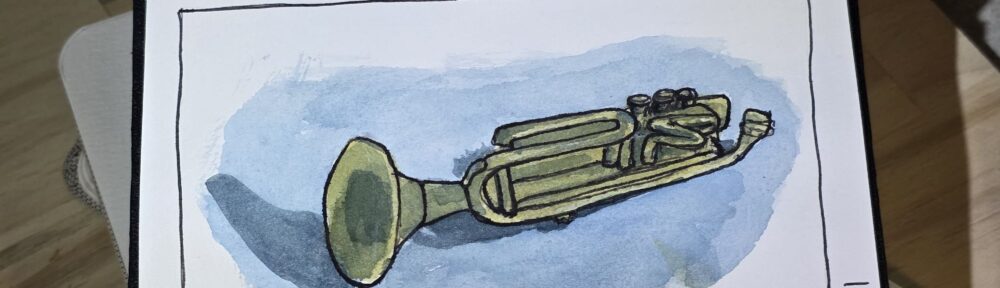
This morning the Random Object Randomogrifier handed me a trumpet. Not just any horn, but the kind that makes you think about ancient temples, jazz clubs, and my dad practicing cornet in the living room.
Sketch & Coffee, Live! is streamed daily at 5:30am, Texas Time, at the YouTubes
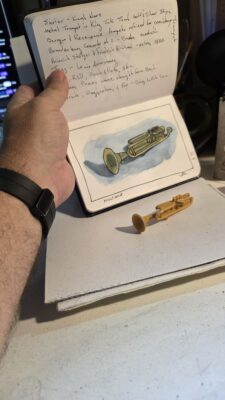
Trumpets start as simple ram’s horns, the shofar, still used in Jewish services today. Thousands of years later, Tutankhamun was buried with silver and gold trumpets. They had no valves, just long metal tubes that could only play what your lips and lungs could coax out. Bach and Mozart pushed players to impossible heights in the Baroque period, writing parts that tested skill and endurance. The only way to change pitch back then was to purse your lips tighter, blow harder, and keep at it.
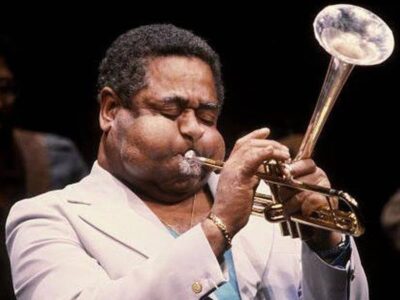
By the 1800s, valves came along and changed everything. Heinrich Stölzel and Friedrich Blühmel gave the trumpet a chromatic voice, opening the door for jazz. Dizzy Gillespie, Louis Armstrong, and a hundred other players turned it into a lead instrument that could sing, swing, and shout. From bugle calls to big band brass, from Penny Lane’s piccolo trumpet to ska and mariachi horns in pop music, the trumpet became a universal traveler.
Click here to watch this episode of Sketch & Coffee!
Also, if you, or a teacher friend, are in need of a 20-30 minutes lesson plan on the evolution of trumpets, feel free to download and share this one:
Leave a Reply