Centipedes have been around for nearly half a billion years, and they still make folks squirm today.
Sketch & Coffee, Live! is streamed daily at 5:30am, Texas Time, at the YouTubes
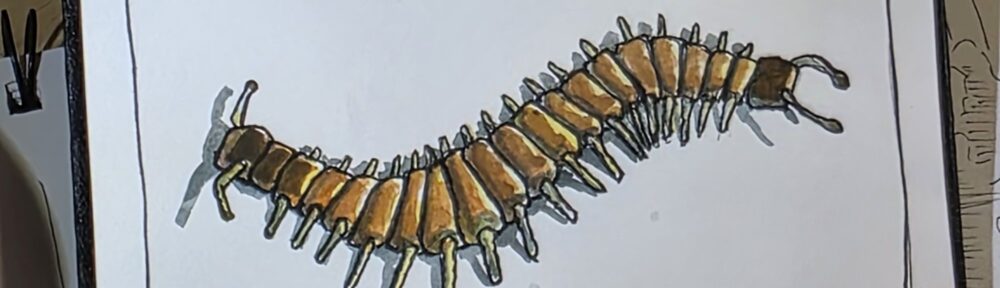
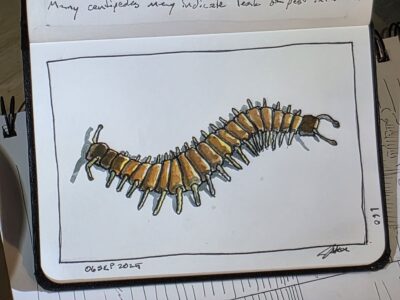
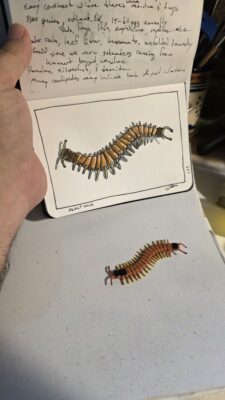
This morning at 5:30 I pulled a centipede out of the Random Object Randomogrifier. The thing stretched long and low across the page, no shadow to hide behind, so I gave it the whole sheet. I started talking about what this critter really is, part of the class Chilopoda, meaning lip-footed. That name comes from the fact that their front legs hook around their mouths and deliver venom. They belong to the larger group Myriapoda, which translates to countless feet. Funny enough, we still call them centipedes, hundred-footers, even though my toy had only 32 legs. So here we were, sketching a 32-footed hundred-footer from the countless-feet clan.
These body styles go back nearly 500 million years to the Cambrian explosion. The first true centipede fossils show up about 430 million years ago, and they have barely changed since. They are living fossils, still thriving in leaf litter and soil across every continent except Antarctica. I suspect if we ever dig deep enough there, we will find them too, since they existed long before the continents split. It is a simple but successful body plan that has kept on working.
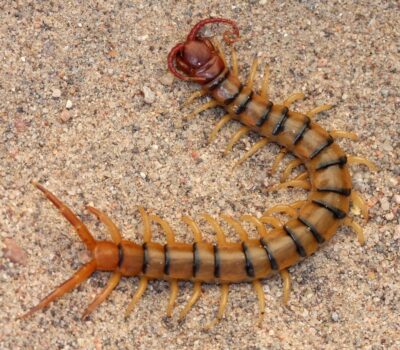
Centipedes are everywhere warm and damp, hiding under rocks, logs, and even laundry piles, hunting insects. Some species, like Scolopendra polymorpha, the tiger centipede, carry stripes between segments. Scientists estimate there are about 8,000 species, with 3,300 described so far. Each female lays around 50 eggs a year. With all the frogs, birds, and mice eating them, they still double their numbers year after year. That is a tough survivor.

We talked about why people are creeped out by them. The fear of many legs moving fast may be ancient. Our small ancestors were prey for couch-sized arthropods like Arthropleura. It makes sense we would carry that reflex even today. But in truth, centipedes are helpful. They do not spread disease. They eat cockroaches, termites, and silverfish. If you see one or two, they are just doing their job. If you see a lot, it means you have too much moisture or plenty of prey hiding out.
Click here to watch this episode of Sketching and Coffee!
Also, if you or a teacher friend would like a 20-30 minute lesson plan about centipedes, feel free to download and share this one:
Leave a Reply