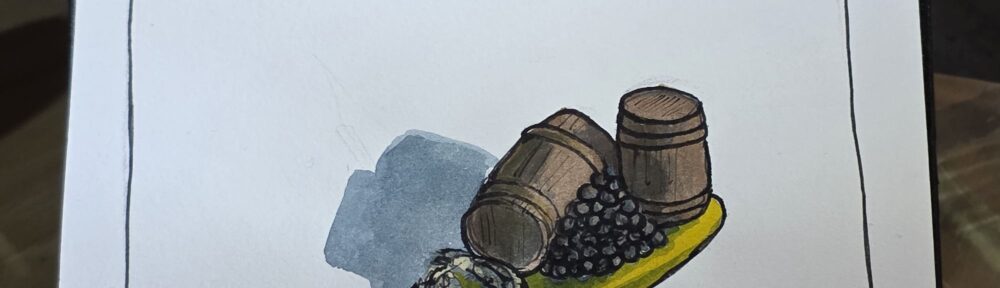
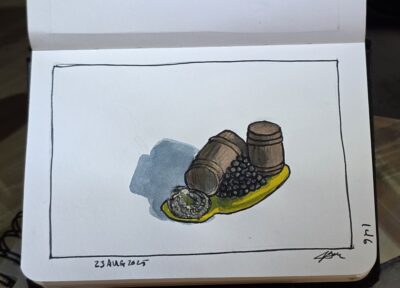
This morning’s random object out of the Random Object Randomogrifier was a set of powder kegs and cannonballs, complete with a rope.
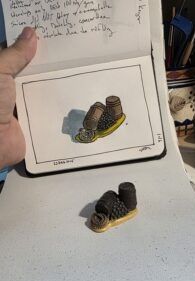
These little wooden kegs were designed to keep powder dry on a ship. Tar was rubbed into the wood to make them waterproof and dustproof, because loose powder dust was dangerous and could mean disaster on board. Powder that stayed dry was ready when the cannons needed to fire.
Gunpowder itself came out of China in the 9th century, first for fireworks and shows before somebody saw its use in war. By the 12th century, cannons were being used around the world. At first, people fired stones, wood, or lead, then moved to solid iron balls. Armies collected spent cannonballs from battlefields, and even peasants picked them up to sell back to soldiers. On ships, each gun carried about 100 rounds, meaning hundreds of pounds of iron weighing down the vessel. It was heavy cargo, but necessary when facing pirates or rival fleets.
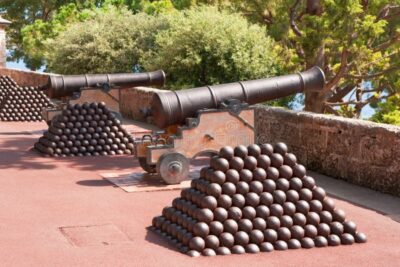
There’s an old story about sailors bowling on deck with cannonballs. That one is pure fabrication. Sailors weren’t about to risk denting the shot or smashing up the deck. Cannonballs had to stay round and smooth to fire true. Instead, they entertained themselves with wrestling, dice, cards, or playing their concertinas to pass the long voyages. Iron balls lasted until rifled cannons came along in the 19th century. Rifling required elongated shells, not round shot, so the age of the iron cannonball came to a close.
Click here to watch thi episode of Sketch & Coffee, Live!
Also, if you or a teacher friend are in need of a 20-30 minute lesson on Cannonballs and Gunpowder, feel free to use and share this lesson plan:
Leave a Reply