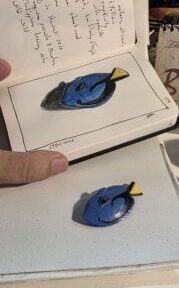
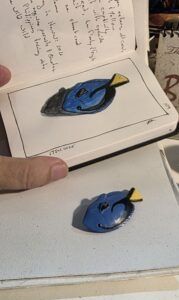
Before you get too enchanted by those bright blues and yellows, let me say this plainly: we should not be keeping blue tangs in aquariums.
Sketch & Coffee, LIVE! is streamed daily at 5:30am, Texas Time, over at the YouTubes
Blue tangs have been cleaning coral for an estimated 20 million years. They live in the west Pacific and around Indonesia, where they keep reefs healthy by eating algae before it clogs things up. That’s their niche. They’re built for it. Disk-shaped, flat, and decorated in high-contrast blue, yellow, and black, they’re visually striking and that has been a problem for them.
In the 1980s, saltwater tanks suddenly became a status symbol. Advancesments in shipping and saltwater filtratiation resulted in several restaurants, hotels, and high-end homes filling up with exotic fish. The difficulty of keeping blue tangs alive became a badge of honor for hobby aquarists and people started treating blue tangs like trophies. Getting one to survive was a brag, because most of them don’t.
They are fragile. Over 90% of wild-caught blue tangs die in tanks. They don’t like it. It’s not just that they don’t like it, they don’t like it A LOT. But because of movies like Finding Nemo and Finding Dory, every kid wanted one, and parents dutifully bought them, again and again. When the first fish died, they’d sneak off to the store, try to find a match, and never tell the kid.
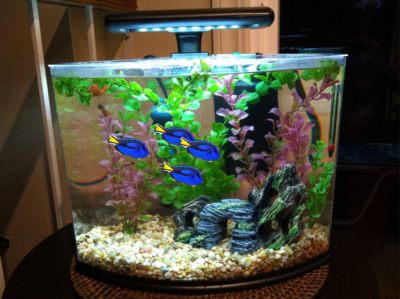
But the real crime isn’t just that they die. It’s how they’re collected. Some poachers still use cyanide to stun the fish, killing coral and everything around it. The fish float up, they scoop them, and move on. The coral? It takes hundreds of years to recover, if it ever does. All for a fish that likely won’t survive the trip.
But there is some hope. Indonesia now requires permits and sets quotas. In the Philippines, charities are training collectors to use nets instead of poison. And in Hawaii, the Oceanic Institute has developed captive breeding techniques. These tank-born tangs live longer, clean better, and adapt more easily.
Still. Leave the wild in the wild. And remember… Just keep swimming, just keep swimming, swi-i-imming, swi-i-imming…
Click here to watch the Blue Tang episode of Sketch & Coffee, LIVE!
Leave a Reply